7 stories
·
0 followers

Ninja Warrior is now officially an Olympic sport

3 Shares

There’s been a strange little revolution brewing over the last few years in the world of modern pentathlon—the weirdest, most expensive, and least-watched event of the entire Summer Olympic Games catalogue. The sport (based around a very early 20th century understanding of the skills of a modern soldier, including sword fighting, swimming, running, and firing what were later turned into laser-based guns) ran into some PR problems back at the 2020 Games, when participants complained that the fifth event, equestrian show-jumping, introduced an unwelcome random element to the sport. (Your event’s reputation is not doing great, modern-popularity wise, when it generates headlines about a pissed-off coach reportedly punching a horse.) All of which somehow trickled down to today, when Variety reports that Japanese TV series Ninja Warrior is now an official part of the Summer Olympic Games.

It’s like this: Shortly after the 2020 Games, the UIPM—the governing body that oversees modern pentathlon—decided enough was enough with the horses, which nobody seemed to like watching, massively raised the cost for new athletes to enter the sport, and were distressingly prone to getting punched. So they did some tests, and then took an official vote, deciding that show-jumping would be replaced with an obstacle course run so clearly modeled on long-running Japanese reality competition show Sasuke/Ninja Warrior that the UIPM went ahead and brought in the show’s producers to consult on building their courses. Over protests from a pretty decent chunk of current modern pentathletes—who had, it’s worth noting, invested a lot of both time and money in getting good at jumping over stuff on horses, only for all that work to be rendered moot in favor of high-impact monkeybars—the rule changes went forward in the sport’s junior competitions a couple of years ago, with a plan to officially roll it out for adults at the 2028 Summer Games in Los Angeles.

All of which brings us back to today, when the UIPM announced that not only would the 2028 Olympics version of modern pentathlon feature the obstacle runs, but that it would officially be licensed from Japanese Ninja Warrior producer TBS (not to be confused with the American TV network of the same name), which is allowing its intellectual property to be used for the events’ obstacle designs. “What an incredible honor it is for our Federation to be working closely with TBS, the broadcaster that gave Ninja Warrior to the world,” UIPM president Rob Stull said of the deal. “Ahead of LA28, this agreement represents a wonderful and unique coming together of primetime entertainment and Olympic sports culture.”


Read the whole story
valkyrie
1 hour ago
reply
Share this story
Delete

Saturday Morning Breakfast Cereal - Cave

1 Share


Click here to go see the bonus panel!

Hovertext:
The worst part about being a caveman is people constantly yelling questions about seed oil and fermented foods when you're just trying to relax.


Today's News:
Read the whole story
valkyrie
2 days ago
reply
Share this story
Delete

Why are the Artemis II photos on Flickr?

1 Share
candu shared this story from Anil Dash.

If you followed along with the recent joyful celebrations of the Artemis cruise around the moon, and took a moment to dive into the photographic archives of the mission, you might have noticed that all of the original images were shared by NASA on the venerable photo sharing service Flickr. What you might not know is… why?

Here’s the TL;DR:

  • Flickr comes from (and helped start!) the Web 2.0 era, which was based on users having control over their data
  • Tools at that time began giving creators the power to decide what license they wanted to release their content under, including permissions about how it could be shared, used, or remixed
  • Because the people who made platforms back then were users and creators themselves, they thought about the long term and wanted to be able to preserve people’s work
  • After lots of corporate shuffling, Flickr ended up in the hands of a family-owned company, SmugMug, and they made the Flickr Foundation to preserve public photos for the next 100 years
  • NASA’s images should only be on a service where they can be stored in full resolution, for the long term, dedicated to the public domain — which the other social media apps of today can’t do

The Photographic Record

First, some background for folks who might not know what Flickr is, or who may have forgotten. Flickr is a social sharing site for photography which was founded in 2004, and these days people might say that it shares some of its cofounders with Slack, though back when Slack started, everybody said that the company was started by some of the founders of Flickr. That’s because Flickr was arguably the most influential site of the Web 2.0 era, helping define everything from the user interface design to the bright colors to the easy way that developers could access data from the platform. A lot of the things that we take for granted on the modern social internet, like a friendly “voice” used to communicate to users, were pioneered by Flickr, and then quickly came to be considered standard expectations for the apps and sites that followed. It’s hard to imagine that sites from Tumblr to Grindr would have omitted their final “e”s without Flickr’s precedent.

Flickr spun out of a Canadian gaming company called Ludicorp, founded by Stewart Butterfield (later CEO/co-founder of Slack) and Caterina Fake (later an investor and chair of Etsy). The photo-sharing service was extracted from the pieces of a somewhat unsuccessful attempt at multiplayer gaming called “Game Neverending”, but it retained the playfulness of that game even as it became a social app. Flickr also inherited the fine-grained privacy controls and thoughtful community features of earlier social platforms like LiveJournal — along with being actively, intentionally moderated by actual humans who worked diligently to prevent destructive behaviors on the platform. This meant that, more than 20 years ago, this early photo sharing community typically had better social norms than people see on today’s social media apps. (A little side note: Part of Flickr/Ludicorp’s initial funding was with public money. What a remarkable way to fund lasting innovation!)

With all of these groundbreaking features, Flickr didn’t just inspire lots of other entrepreneurs to create a new wave of Web 2.0 startups, it also attracted millions of users who, for the first time, began taking photos with the primary goal of sharing them online. Prior to this moment, the earliest phones with decent cameras were coming to market (it would be years until the iPhone came out), and other photo services of the time were still often oriented towards taking film to processing facilities, and then having the professionals at those facilities scan the resulting images and post them to a clunky online service where you could tediously click through them in a virtual album. Until Flickr, photo sharing online was essentially still analog, even if the experience was technically happening online.

In Focus

Flickr wasn't a social platform first — it was a photography platform first. That means it was designed to store high-resolution versions of every image, and didn't distort pictures with things like filters. Every image showed details like what kind of camera had taken the photo, and even what specific settings were used to take the shot. People started building communities around the then-new idea of using tags to help them find content by topics online — an idea that would directly influence the creation of hashtags on Twitter a few years later.

Another core idea of the time was a firm belief in open data: people should own and control their own work. Eventually, some experts (including a then-teenage Aaron Swartz, who we'd later talk about in the early days of Markdown) created a set of standards called Creative Commons licenses, now maintained by an organization of the same name. Flickr made it easy for users to describe what permissions people had for reusing or remixing any photos they posted. (I was helping out with a blogging platform back then, and I think we were the first tool to support this stuff. It felt like a big deal at the time!)

People's Flickr images started popping up in corporate PowerPoint presentations or commercial advertising almost immediately. A little sidebar: the incredibly positive and generous intent of these open licenses has since been exploited by extractive Big AI companies, who ransacked all of the images on Flickr that had permissive licenses without any consent from, or compensation to, the creators. That might be legal by most readings of the licenses, but if you have hundreds of billions of dollars and don't think you should at least have a conversation with the photographers whose work you're using, you're probably an asshole.

Archival Prints

Our close-knit community of people building the new era of web apps was keenly aware that our users were creating culture. This realization brought a huge amount of responsibility — not just in enabling users to express themselves, but in thinking about the long term for people's ownership of their works. Public institutions had just begun to use these platforms, which meant that the content being shared wasn't just a nice picture to look at: it might be socially or even historically significant.

What happened in the years that followed was… a lot of corporate machinations. Flickr got bought by Yahoo. Flickr's founders left Yahoo. Yahoo got bought by Verizon. You can imagine how all of that went; the details aren't all that important, except to say that by the time Instagram launched, Flickr had begun to fade into obscurity. People were focused on mobile phones instead of the desktop, on sharing square images with filters instead of full-resolution photography, and on connecting socially instead of caring about photos as art or a cultural record. Nobody would post the canonical historical photo of an event with a Valencia filter on it. Most of Flickr's users moved on, rarely checking their old accounts — until a family-owned photo service named SmugMug bought the service from Yahoo. A human-scale operation with some actual heart and a love of photography was a much better home for the platform than some random division of Verizon.

Commons Sense

In 2022, the new team at SmugMug that owned Flickr decided to focus on Flickr’s larger place in culture. Many major institutions around the world had chosen to archive their public photos on Flickr because of its superior support for high-resolution imagery, its unique ability to declare explicit legal licenses (including public domain licenses), and its long-term reputation for reliably hosting content without any of the harms or abuses that typical social networks had inflicted on users. Museums around the world had entire catalogs on the platform, and governments routinely used it to document their public events. When I had a photo taken at an official White House event with President Obama, his team sent me the final image afterward by sending me a Flickr link; when Zohran Mamdani met King Charles, the NYC Mayor’s Office shared those pictures on Flickr, too.

The Flickr team at SmugMug did something special with their responsibility about these public works, due to their cultural significance to the world. They made the Flickr Commons, and brought in a team with expertise in digital archiving and community. This is a project of The Flickr Foundation, designed to preserve digital legacies, and begun in collaboration with no less than the U.S. Library of Congress (back before that was an institution under siege.) They are developing a hundred year plan for how to care for these works, which is virtually unheard-of in the digital world. (You should absolutely donate to support the Flickr Foundation in their mission to preserve these vital public resources for many years in the future.)

It’s in this context that NASA has long been sharing its imagery on Flickr, for all of its missions — not just Artemis II. There’s even a special section for NASA on The Commons. And since everything is provided in incredibly high-resolution and has every single detail about the photo and how it was taken, it’s possible to combine the information about the photo with other data and create amazing resources like this beautiful timeline of the entire mission. You can see Hank Green’s wonderful narration of his inspiration and creative journey behind the timeline right here:

Why Not With Us?

Anybody who’s read my site for a while knows that I’m a huge proponent of owning your own website, and having your own content live there. Shouldn’t NASA, of all institutions, have their photos live on their own nasa.gov website? Well, yes! But.

One complication is that many large institutions, especially ones that have developed complex processes for good reasons, like government agencies and big businesses, often have trouble maintaining public-facing web infrastructure over long timeframes. Running a website that millions of people can access requires constant updates and maintenance, guarding against a never-ending onslaught of security challenges (a task that’s rapidly getting more difficult!), and the internal knowledge on how a site was created in the first place often leaves when employees do.

In contrast, platforms that are run by technically fluent, well-intentioned and thoughtful technologists can be very effective in maintaining content over a timescale of decades. The SmugMug team has been very thoughtful in managing both their business and their technical infrastructure in order to sustain Flickr’s public archives for years to come. (Though, as mentioned, you should still donate to ensure they can keep doing so!)

What’s more painful is the more recent threats to public stewardship of this kind of content. The traditional authoritarian impulse to destroy or falsify the public record has not spared the digital realm under the current administration. Wide swaths of the government’s websites have been erased, taken offline, or had their content modified to either delete or adulterate the content. Leaders who regularly post AI slop on their social media accounts, and who have begun posting lies and distortions on major websites like the White House’s, will of course not hesitate to modify or remove photos from public archives as well. By having the public’s images preserved in an independent archive in standard formats, we increase the likelihood of future generations being able to access accurate copies of these historical records.

We’ll be glad to have archives like Flickr’s in the future, and people around the world will be glad for its place in archiving even much more mundane aspects of culture.

Taking off

I was honored to get to reflect on my long history with Flickr, and with online community, in an interview with my old friend Jessamyn West, for the Flickr Foundation’s blog. In a conversation that unspooled over a few months, I think we covered so many of the themes that resonated in what I’ve mentioned here, and what struck me most was how much I wanted a new generation of people on the internet to have their own version of the communities and experiences that we got to have when sites like Flickr were first being made. People still cherish those values!

The beautiful thing about communities and platforms like Flickr is that they remind us that not everything on the internet has to be ephemeral, not everything on the web has to be hyper-commercial. Sometimes a bunch of decent people can do a good thing for the right reasons, and the result of that work can persevere for decades. Then, others who do some of the most ambitious and astounding things imaginable can build on that work to inspire us. And then, some more regular folks can build on top of that and help us waste a little bit of time just clicking around on something fun. That’s what the internet is supposed to be about!

This isn’t just about recounting old web lore — this is about explaining the internet we have right now. Hank’s timeline site is brand new, entertaining a whole new generation, and probably the majority of the audience who are looking at it weren’t even born when Flickr was first conceived. But the reason he can build that site is because of the values and the inventiveness of the team and community who created a platform like Flickr — and because those kinds of values are durable. They might not be as loud or flashy, but they are still everywhere, quietly enabling a lot of the things we enjoy most every day.

Public dollars helped make a fascinating community, then public dollars enabled a breathtaking journey into space, and then a public commons helped a creator make a novel way to explore that journey. Lots of people chose, over and over, to be generous with their genius. These are all gifts that a bunch of strangers gave each other, over hundreds of thousands of miles, and many years. Inspiration is all around us!

A Setting Earth

Read the whole story
valkyrie
4 days ago
reply
Share this story
Delete

Tech in Plain Sight: The Mechanics of String Trimmers

1 Share

My old friend Jeff was always vocally upset that he didn’t come up with the idea of a string trimmer, commonly known as a Weed Eater or Weed Whacker. On the one hand, the idea is totally simple: spin some nylon line and cut grass and other relatively soft things. But, it turns out, that making the device actually usable requires a little bit of mechanical engineering.

Of course, the noisy part is a motor. The motor — driven by an engine, a battery, or a power cord — spins a flexible nylon line fast enough that the line becomes rigid from centrifugal force. That’s not the important part.

The humble spool at the bottom of the trimmer is where decades of mechanical engineering, questionable patents, consumer frustration, and genuine cleverness all meet. The earliest string trimmers were primitive. [George Ballas], who patented the Weed Eater in the early 1970s, reportedly got the idea from the rotating brushes in a car wash. Attach flexible cords to a spinning head, and they become cutting tools. In fact, the prototype used a tin can for the head. Elegant. But once the line wears down — which it does constantly — you need a way to expose fresh line. That turns out to be harder than it sounds.

The Simplest System

The easiest approach is fixed-length line. Some trimmers still work this way. You cut short pieces of heavy line (or buy it precut) and insert them into holes in the head. No spool. No springs. No moving parts.

These systems are rugged and are popular on commercial units designed to survive abuse. They also work well with thicker lines or even plastic blades. But they are annoying because every time the line wears out, you stop working and manually replace it. Spool-based systems became dominant very quickly.

The basic spool idea is straightforward enough. Wind a long nylon filament onto a reel. Some reels have two sections to feed line out on two sides of the rotating head. As the line wears away, feed out more line from the spool. But how do you do that while the thing is spinning at several thousand RPM?

Bump Feed

If you’ve ever lightly smacked the bottom of a running trimmer against the ground, you’ve used a bump feed mechanism.

Inside the head is a spool loaded with line and pressed upward by a spring. The line exits through eyelets on the side of the head. Under normal operation, friction and centrifugal force keep the spool from turning freely.

When you bump the bottom of the head against the ground, inertia momentarily compresses the spring and disengages locking tabs or detents. The spool can rotate briefly, paying out a short amount of line. When you release pressure, the spring re-engages the lock.

At least, that’s the theory. In practice, bump heads have to balance several competing requirements. The spool must not unwind accidentally. The line can’t bind. Dirt and grass clippings can’t jam the mechanism. The head must survive repeated impacts with concrete, rocks, and fence posts because users inevitably abuse them.

And then there’s the line itself. Nylon trimmer line is more complicated than it looks. Different diameters, shapes, and stiffnesses affect how well the feed works. Star-shaped line cuts aggressively but tangles more easily. Round line feeds smoothly but cuts less efficiently. Humidity even matters because nylon absorbs water. Anyone who has left old trimmer line in a garage for years has probably discovered brittle line snapping constantly. We’ve heard people suggest you soak the line — especially old line — in water overnight before loading it.

The bump feed mechanism has another subtle trick. Many heads rely on centrifugal force not only to stiffen the line but also to help lock the spool during operation. At speed, the line pulls outward hard enough to increase friction on the spool. When rotation slows, the spool loosens slightly. A simple mechanical solution.

Of course, they don’t always work and when that happens, you might find some troubleshooting advice in the video from [Will Shackleton] below.

Automatic Feed

Of course, someone decided bump feed was too much work and, thus, the automatic feed was born. These heads attempt to sense when the line has become too short and feed more automatically. These systems are common on electric consumer trimmers.

There are several ways to do this, but many use a ratchet-like mechanism tied to motor speed. When the load on the motor changes because the line becomes shorter, the system advances the spool slightly. Some units feed line every time the motor starts. Others use centrifugal clutches or vibration-sensitive mechanisms. Great when it works.

Part of the problem is that the operating environment is terrible. Grass juice, dirt, vibration, heat, and impacts are all happening simultaneously. It is hard enough to make reliable machinery in a clean factory. Designing a precise mechanism that lives inches from flying mud is another matter entirely. That’s why many professionals prefer simple bump heads despite the inconvenience. Simpler systems usually fail less dramatically.

You can see several head styles in the video below.

The Eyelets Matter More Than You Think

One overlooked component is the eyelet where the line exits the head. That little metal or ceramic ring takes an enormous amount of abuse. The line is moving at perhaps 200 miles per hour at the tip, vibrating continuously, and carrying abrasive dirt particles. A plain plastic hole would wear out quickly.

Some trimmers use hardened steel inserts. Others use aluminum oxide ceramics. The better heads often have replaceable eyelets because manufacturers know they are consumable parts.

The angle matters, too. The line should exit smoothly with minimal friction but still maintain enough control to prevent tangling. You probably don’t notice how important the eyelet is, but you’d notice if it were poorly designed.

Why Tangling Happens

Anyone who has reloaded a spool badly knows the pain of internal tangles. The spool effectively stores torsional energy. If the line is wound unevenly or crosses over itself, it can dig into lower layers under centrifugal load. Once that happens, the line jams. Pulling harder only makes it worse.

This is why most spools have directional arrows molded into them. The line must wind in the correct direction, so rotational forces tighten the winding instead of loosening it.

Modern “easy load” heads try to solve this by allowing users to thread the line straight through the head and then twist a knob to wind it automatically. These systems are genuinely better than older designs, although many still become incomprehensible the first time you disassemble one accidentally.

One trick we’ve heard is that if you spray a lubricant like WD-40 into the eyelet before you use the trimmer, it will help the mechanism feed more smoothly. Let us know if you’ve ever tried that and how it works.

Batteries Changed the Game

Cordless electric trimmers have altered feed mechanism design in subtle ways. Gas trimmers typically run at nearly constant speed, which makes centrifugal systems predictable. Battery trimmers vary speed more often due to electronic controls and power-saving logic. That means newer designs increasingly depend on passive mechanical systems rather than RPM-sensitive tricks. Electronic control also allows some high-end trimmers to detect load changes more intelligently.

Ironically, while motors and batteries have become dramatically more sophisticated, the line feed mechanism is still mostly springs, friction surfaces, tabs, and molded plastic. No microcontroller. No electronic sensors. Go figure.

The string trimmer looks like a brute-force tool. But hidden inside that disposable-looking plastic head is a surprisingly nuanced mechanical system balancing centrifugal force, friction, vibration, inertia, wear, and user abuse. Poor [George Ballas]. He took his prototype to toolmakers, who were all uninterested in the invention. He started the Weed Eater company and launched a lucrative product category.

We love finding all the strange tech around us, from shopping carts to gas pumps.

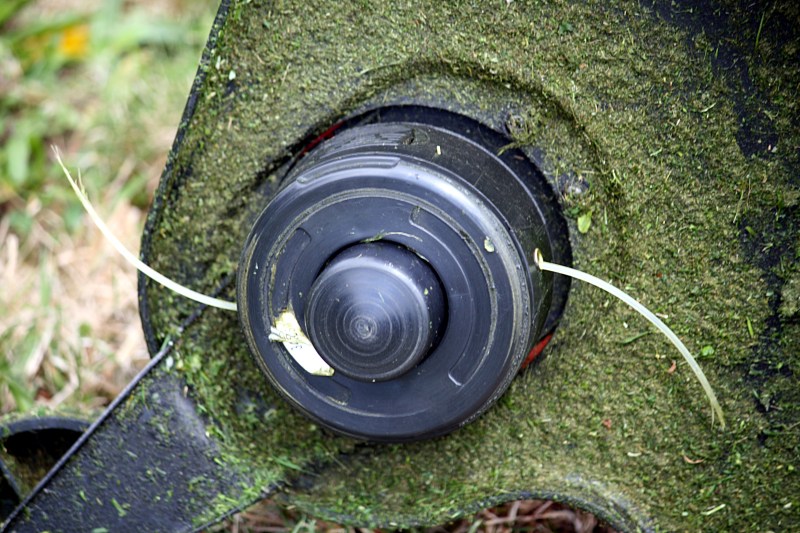
Featured image: “String trimmer” by Hedwig Storch

Read the whole story
valkyrie
5 days ago
reply
Share this story
Delete

Reject AB 2047: California’s Attack on 3D Printers, Creators, and Open Source

1 Share

Wishful thinking

A.B. 2047 would require 3D printers sold in California to use government-approved algorithms that scan print jobs for supposed “firearm blueprint files” and block flagged prints. But the technology this bill mandates cannot reliably do what it is supposed to do.
Ordinary objects like props, repair parts, tools, and toys can share geometric similarities with firearm components, meaning any detection system will produce false positives. Meanwhile, someone intent on making firearm components can find ways to bypass algorithms entirely, create undetectable designs, or simply build a 3D printer with common components.
Algorithms can’t detect intent. This bill signs up California for an expensive game of cat and mouse that only inconveniences people following the law.

Attack on Open Source

This bill goes further than any other like it introducing criminal penalties for the disabling or circumvention of these systems. In practice, this threatens open-source firmware, third-party software tools, repair modifications, and independent innovation around 3D printing technology.

Surveillance Lock-in

A.B. 2047 paves the way for manufacturers to lock users into proprietary ecosystems, restrict repairs, and drive up costs. The requirements can also only be feasibly met with cloud-connected AI scans of every print, a surveillance apparatus prone to misuse and stifling lawful speech.

We’ve also learned from the history of Digital Rights Management (DRM) that giving companies the ability to write untouchable code, shielded by criminal penalties, leaves the consumer worse off. It robs us all of the ability to choose the right tools and improve what we already own—while creating a hotbed for vulnerabilities security experts aren’t allowed to fix.

Only the Beginning
Once this infrastructure exists, it won’t stay limited to firearm-related files. Systems designed to monitor and block prints can easily expand into copyright enforcement, political censorship, or broader restrictions on lawful expression and innovation.
California must reject print censorship, and we’re running out of time. Contact your Assemblymember today and tell them to vote no on A.B. 2047.


Read the whole story
valkyrie
6 days ago
reply
Share this story
Delete

Why Leaded Fuel Is Still A Thing

2 Shares

Leaded fuel is considered one of the greatest environmental failures in modern human history. Adding tetraethyl lead to gasoline reduced knock in internal combustion engines, which was widely considered a good thing. It was only later that the deleterious health effects came into view, by which point there was a massive fleet of lead-dependent automobiles and an industry reluctant to change. Still, the tide turned, and over the last 50 years, unleaded fuel has become the norm for automotive use across the world.

And yet, there remains a hold out—a world where engines still burn leaded fuels and spray their noxious fumes across the countryside. In the aviation sector, leaded fuel remains a normal part of everyday operations to this day amidst concerted efforts to eliminate it for good.

“Low” Lead

Leaded gasoline is a thing of the past in the automotive world, but remains a standard fuel for piston-engined aircraft to this day. Credit: Ahunt, public domain

Piston-engined aircraft do not typically run on the same fuels as automobiles. Instead, they burn aviation gasoline, or Avgas, which comes in specific grades and is designed to suit the needs of aircraft engines, by being less volatile and more suitable for high-performance applications.

The most common grade is 100LL (low lead), which is used widely across North America and Western Europe. Despite the moniker, the fuel contains 0.56 grams/litre of tetraethyl lead (TEL), somewhat higher than many leaded automotive fuels used in the 20th century. As with ground-based applications, the additive is used to provide a measure of valvetrain protection by offering cooling and preventing microwelds between contacting parts. It also provides an easy increase to the fuel’s effective octane rating. The latter is particularly useful in aviation contexts where engines run under high load conditions for extended periods of time, and where performance is critical.

Other grades of aviation fuel are also in regular use in various parts of the world, many of which still contain significant levels of TEL as well. It’s worth noting that turbine-based aviation engines are not relevant to this issue, as they burn kerosene-based fuels which are lead-free.

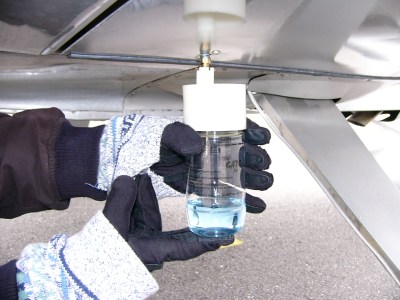
100LL fuel is dyed blue for easy identification on the flight line. It’s one of the most widely used fuels in piston-engined aircraft. Credit: Ahunt, public domain

The basic makeup of aviation gasoline was largely decided by the mid-1940s, a period in which fuels were heavily developed to suit the needs of then-cutting-edge piston military aircraft. At the time, knock resistance was key to enabling supercharged aircraft engines to achieve higher power levels, a point of key military interest during World War II. Tetraethyl lead was an easy way to achieve this, and this requirement also led to development of technologies like water-methanol injection.

Unfortunately, burning leaded fuel effectively sprayed significant amounts of lead into the environment. This lead to elevated blood lead levels in the population, causing premature deaths, neurological damage, and negatively impacting development in children. This is perhaps somewhat galling given that the inventor of TEL, Thomas Midgley Jr., himself suffered significant health effects from the compound. Many workers would also die during early efforts to produce industrial amounts of TEL in the 1920s. It’s one of many examples from the 20th century of industrial will prevailing in spite of obvious severe health risks from a dangerous but otherwise useful chemical.

Despite early knowledge of the dangers, it took some time for the negative impacts of TEL to become readily apparent on a wide scale. Japan lead the charge with a leaded fuel ban for automotive use in 1986, with other developed countries following suit in years to come. It would take decades for the last domino to fall, with Algeria finally outlawing the fuel in 2021.

As per the MSDS, 100LL fuel is not good for humans or the environment. Credit: Shell MSDS

However, the aviation world has not been so quick to abandon lead. Much of the reasoning behind this comes down to practicality. Aviation piston engines simply require high octane fuel and TEL has proven one of the easiest ways to achieve a high rating. 100LL, for example, has a MON rating of 100, which is quite high compared to even premium gasoline used in automotive applications.

Engines designed to run on TEL often rely on the additive to prevent excessive valve wear, too, so running these engines on non-leaded fuels can significantly increase wear. This would be an expensive inconvenience in an automotive application, but when the engine is what’s keeping you in the sky, it’s less desirable to risk a failure by running a cleaner fuel.

In 2019, the FAA estimated that there were 167,000 aircraft in the United States that relied on 100LL avgas, and 230,000 worldwide. The agency had asked in 2014 for industry proposals to make a transition towards unleaded fuels for internal combustion applications.

However, testing revealed issues with proposed alternatives, and was eventually halted in 2018. The FAA has since provided a draft plan in 2026 that lays out the timeline to phase out leaded aviation fuel for good. The intent is to end the use of 100LL fuel in the United States by 2030, excepting Alaska, which will phase out the fuel in 2032. The intention is to take an incremental approach, giving the industry time to develop and certify unleaded replacement fuels—with G100UL, 100R, and UL100E all candidates for FAA approval.

Real-world use of these fuels will then be monitored for compatibility and safety and to determine if further support or changes are required to manage the transition away from 100LL. For now, the timelines are still subject to change, particularly in Alaska, where piston-engined aircraft are particularly vital for transport and logistics are harder to manage. However, it marks a very real commitment to ending the use of leaded aviation for good, at least in the United States. If the FAA does manage to pull off this feat, it should be readily achievable for other countries around the world.

Ultimately, leaded aviation fuels aren’t causing the same level of damage to humanity and the environment as leaded automotive fuels, purely by virtue of their more limited use. Still, it’s never ideal to be spraying lead into the environment, and the health risks are always going to be elevated for those near general aviation airports or under flightpaths of piston-engined aircraft. It’s positive that there is a real commitment to end the use of these fuels, but much work remains to be done to end the reign of tetraethyl lead for good.

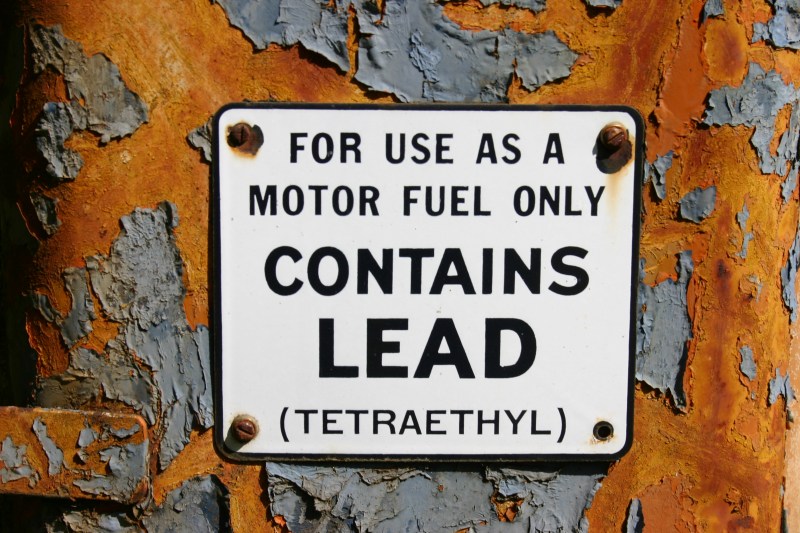
Featured Image: “Tetraethyl Lead” by [David Brodbeck]

Read the whole story
valkyrie
9 days ago
reply
Share this story
Delete
Next Page of Stories