 Log in


candu shared this story from  kottke.org. |
Bastardica is “a foundry for bastard web fonts. Mix, stretch and/or squish them.” E.g. Nervous Sans: “Arial is stacked five times, pseudo-randomly twitching out of line.” I quite like Impacter.




If you already know what a nonius is, you can probably skip this post. But, if like us, you would have to look it up, we’ll tell you what we found out. It turns out, a translation mistake taught us a new word and some history we weren’t aware of.
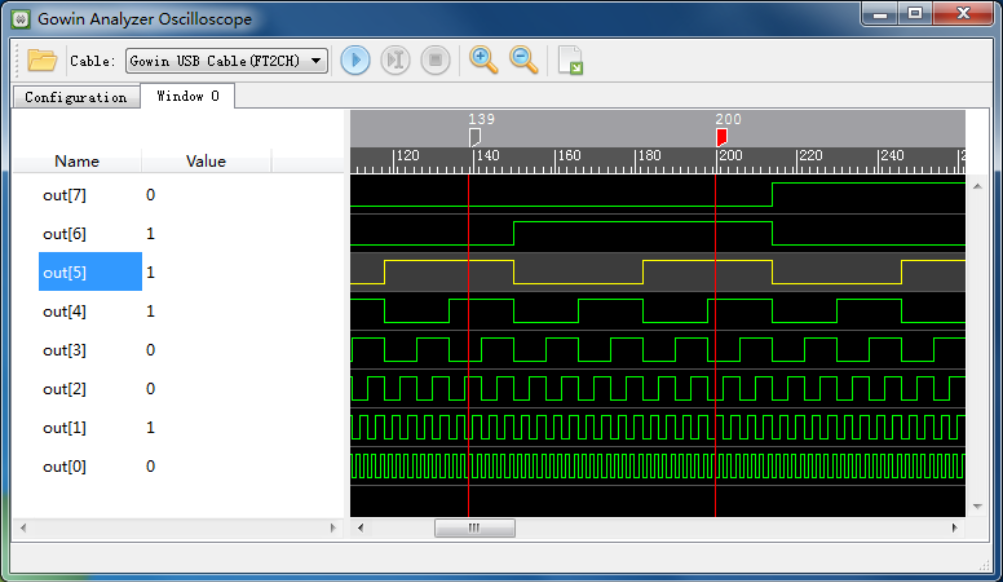
Have a look at the adjacent graphic from a waveform display. What would you call the vertical red lines at positions 139 and 200?
We’d probably call them markers. Or maybe cursors. The manual, however, calls each one a “nonius”. It refers to them that way multiple times.
Oddly, the manual also has sentences like “Select one nonius and right-click, and then select ‘Remove Marker’ in the next window to delete the nonius.”
So, clearly, a nonius is the vertical line marker or cursor. But that, of course, begs a question…
What is a Nonius?
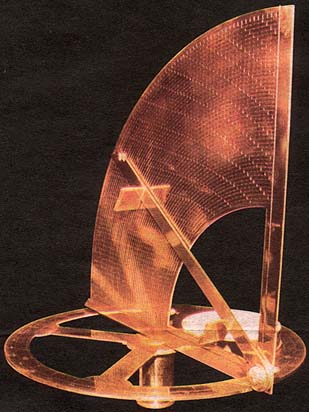
However, there was an earlier version used to improve measurements on astrolabes. A Portuguese navigator named [Pedro Nunes] created this type of astrolabe in 1542. The Latinized version of his name is [Petrus Nonius]. What are the odds of him inventing… oh wait, they named it after him. That does make more sense.
The nonius is a series of concentric circles traced on the instrument. Working towards the center, each circle has fewer divisions than the previous one. In fact, if the outer ring had 90 marks for 90 degrees, the next ring would have 89, and the following one would have 88.
The astrolabe’s line, the “alidade”, would cross all these circles but would be closest to one mark on one circle. Given that mark and that circle, you could look up the correct answer.
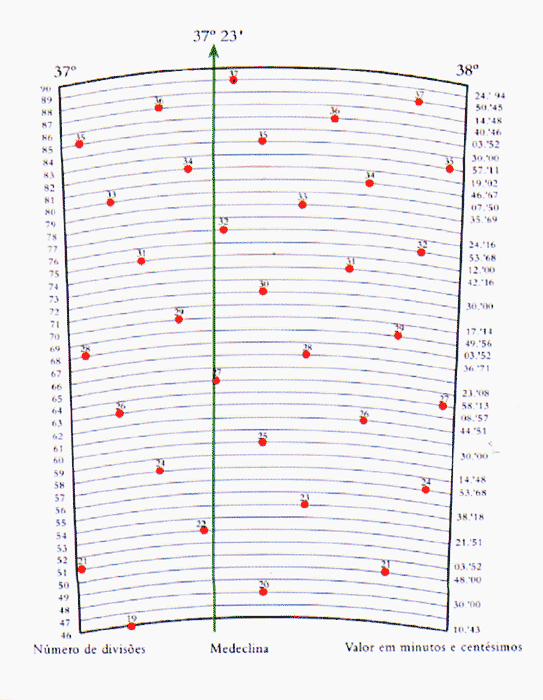
For example, the image shows such a system from [Nunes] himself. It shows the circle from 37 degrees to 38 degrees. You can see the 89th circle has only one mark for 37. The other marks are in other sectors of the outer ring. The 88th, for example, has two marks for 36 and 37.
On ring 65, the line runs right over the 27, which is hard to read because the line covers it up. With a table lookup, you’d find the correct value was 37º 23′ within 0.08′. Not bad. [Nunes] was considered one of the greatest mathematicians of his time.
But we had never heard of him, which goes to show that being a mathematician is not a good way to get lasting fame. [Charles V], [Nostradamus], and [John Calvin] were all born around the same time and, while not household names, are more likely to be known today than [Nunes].
And while this is interesting, it raises another question: Why did the GOWIN software instruction manual call the vertical marker line on a scope trace a nonius?
Why Nonius?

Our guess is that this is a translation mix-up: Chinese 游标 can mean either a computing cursor or a vernier. Or a nonius. Someone apparently selected the wrong English equivalent.
Of course, we figured it out. Plus, we learned a new word and a little history. So we aren’t complaining.
Astrolabes are pretty amazing. Navigation was so important that it drove many technological advancements. Of course, measuring things in general was also of keen interest to our forefathers.
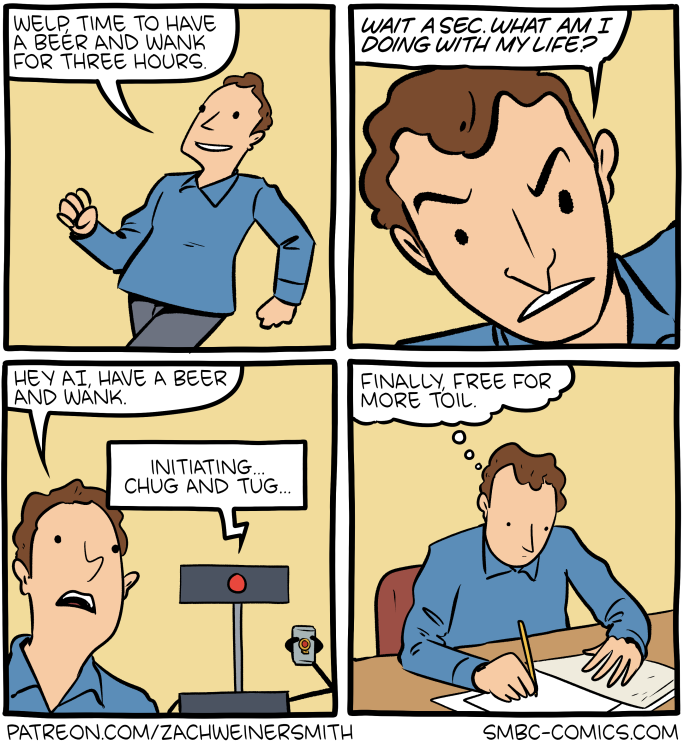
Click here to go see the bonus panel!
Hovertext:
I'm having the last panel inscribed on my tombstone.
Today's News:

It probably goes without saying that if you send four humans to observe the Moon up close, they’ll see things that those of us stuck here on Earth have never noticed. Luckily for us, they took impeccable notes and brought plenty of cameras, which NASA has shared with the rest of the class as Artemis II: Sights & Sounds of Science.
Well, technically it’s called the Artemis II Preliminary Lunar Science Report, but we appreciate the space agency adding a little flair to it and formatting the findings for public consumption. Arguably the most significant observations detailed in the report are the impact flashes on the lunar surface. As you may recall, the trajectory of the Orion spacecraft meant the crew experienced a unique solar eclipse on the sixth day of the mission, giving them an unprecedented close-up view of the darkened Moon. During this time, they were able to see flashes of light with their unaided eyes, which NASA has since confirmed were small rocky fragments — perhaps no more than a few inches wide — slamming into the lunar surface at incredible speeds.
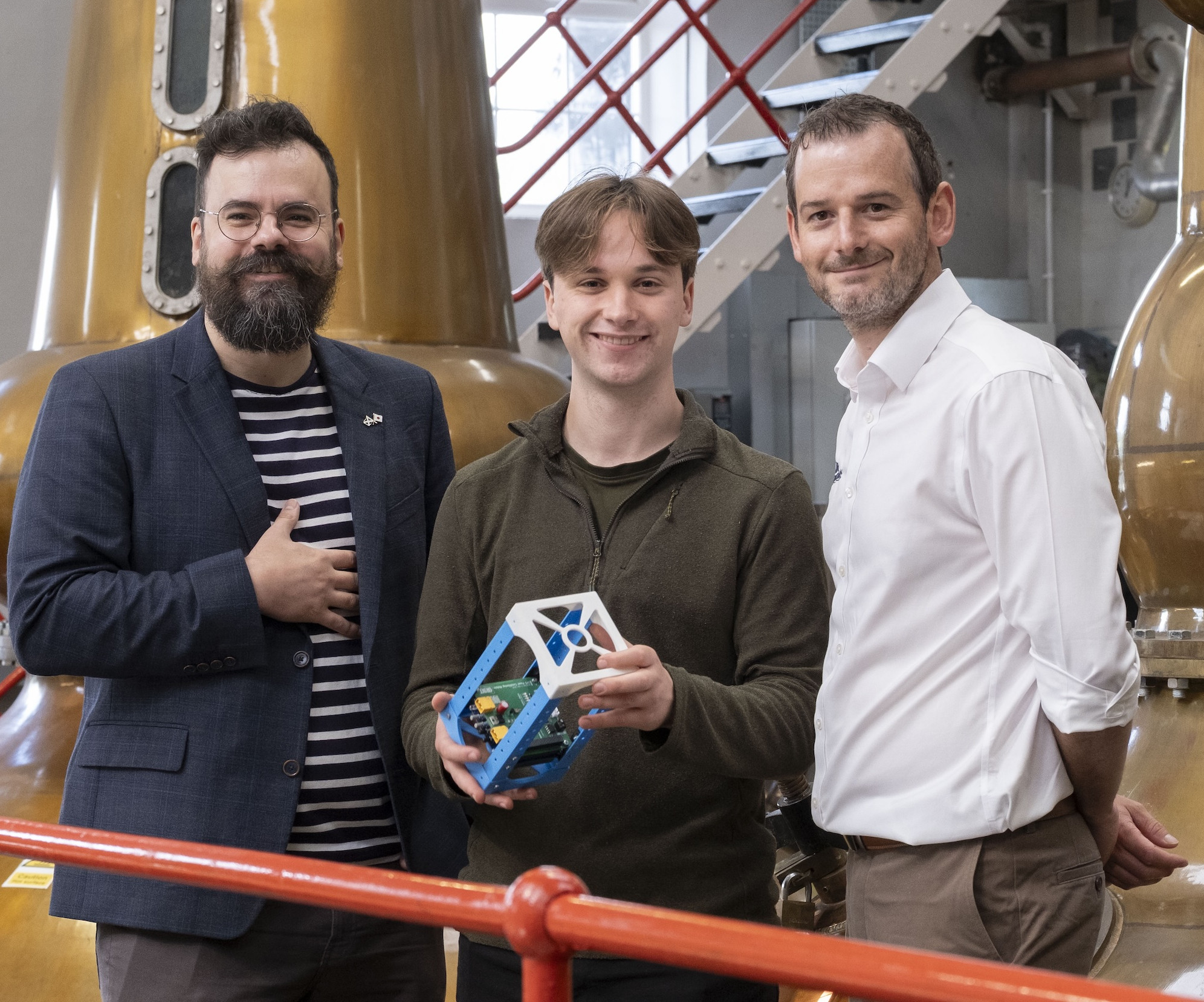
The Artemis II mission was one for the history books, for most of us the most significant space mission of our lifetimes. But as access to space becomes cheaper and more routine, it stands to reason that not all activities in orbit will be quite so momentous. For example, students from the University of Glasgow and Japan’s Kyushu Institute are currently collaborating on a planned mission to distill whisky in space for the first time.
Scheduled to launch in 2028, the CubeSat will carry 10 ml of fluid and spend five years in orbit studying how its chemical composition changes, with a special interest in how the frequent changes experienced as the spacecraft travels around the Earth could influence the maturing process. While this might not seem terribly interesting to teetotalers, it offers an opportunity to gain more practical experience with orbital manufacturing which will likely inform future missions.
Speaking of studying how things behave — or perhaps how they don’t behave, as the case may be — we have an update on the controversy around this year’s Nikon Small World in Motion competition. After several experts in the field raised the alarm last week, Ning Xu’s winning video supposedly showing cilia in airway tissue samples taken from a child with primary ciliary dyskinesia (PCD) has been disqualified for using generative AI. This shifted all the previous winners up a rank, so Nguyen Nam Nhat of Vietnam now takes the top spot with a video of a roundworm and a single-celled Dileptus.
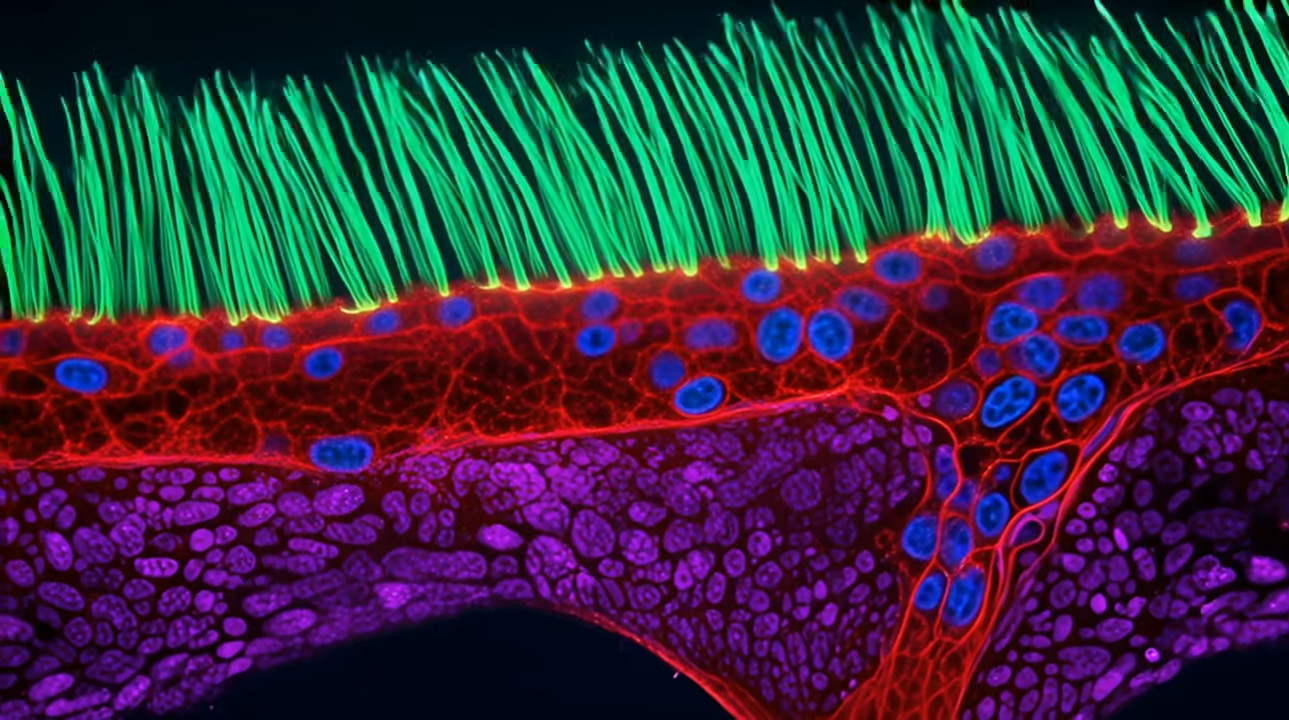
Xu had previously claimed that AI was only used for post-processing the original images, which would have already put the entry into something of a gray area as far as the competition was concerned. But according to researchers familiar with PCD, the structures shown in the video don’t look like anything they’d ever seen in a patient, prompting suspicion that the admittedly fascinating visuals were actually the result of an AI hallucination.
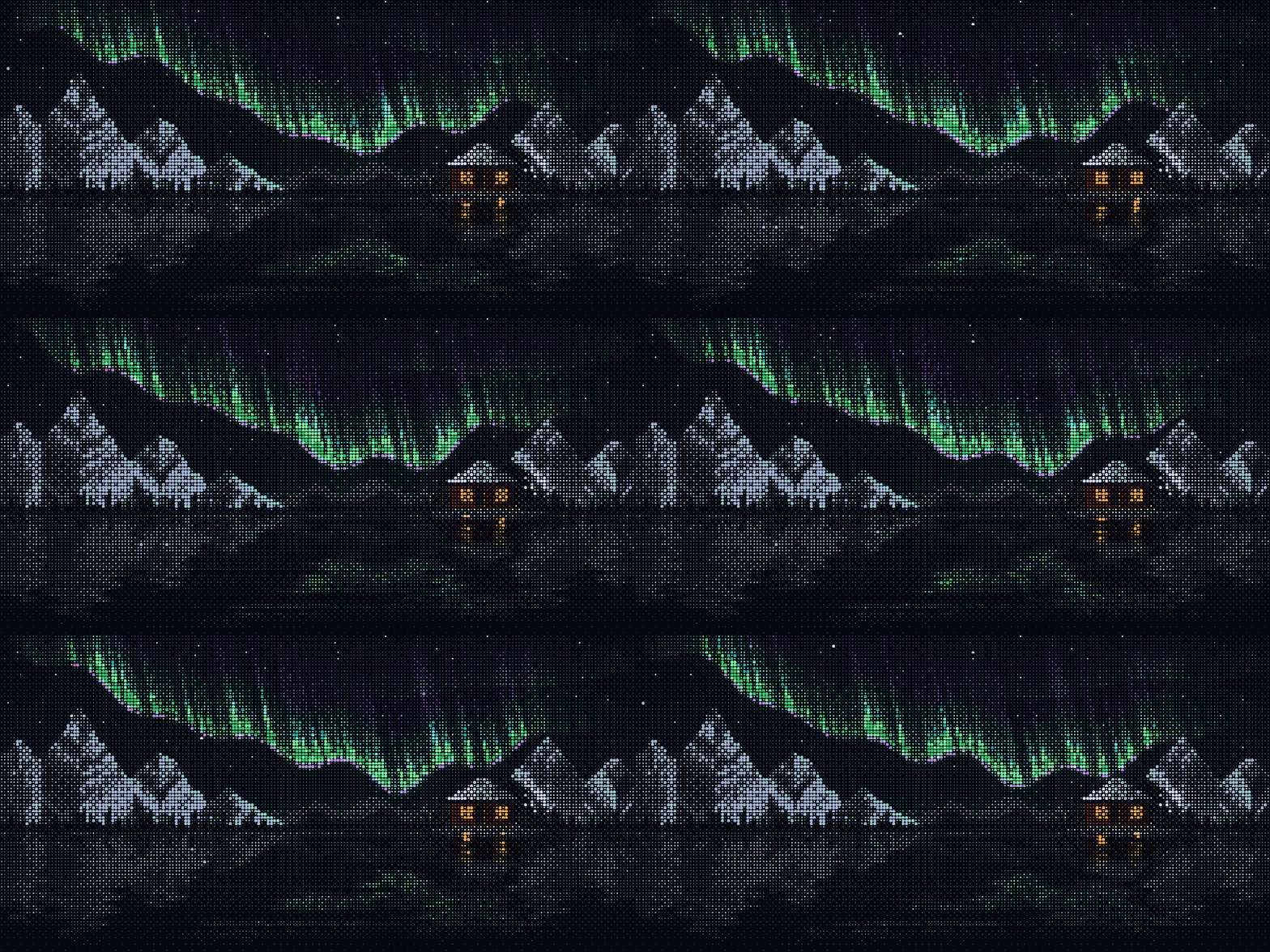
Finally, on the subject of beautiful images, we’d like to point you to ascii.rest. As you’ve probably noticed, we appreciate minimal web design around these parts, so this collection of ASCII animations and art immediately caught our eye. Some of the pieces, like “aurora fjord” shown here, can be exported as a GIF or video clip. But there’s also the option to embed them in your HTML with a couple of lines, which also gives you the opportunity to customize and manipulate them in various ways. If you do anything cool with these designs, we’d love to see it.
See something interesting that you think would be a good fit for our weekly Links column? Drop us a line, we’d love to hear about it.

| archive - contact - sexy exciting merchandise - search - about |

| ← previous | October 7th, 2026 | next |
October 7th, 2026: Are we 100% certain it's not knuckle tats that say "KERN" and "ING"?? – Ryan | ||